This is going to be a place for Malaysian new and used cars reviews and Automotive industry related stuff. Viewers contribution(s) are welcome... Active since 2006 with 1000+ posts and counting. We are Anti-Plagiarism Blog. Please E-mail me at whlim79@icloud.com if you spot any Plagiarism Element.
In this post entry, I'm blogging about the Honda Beat 660 Kei-Roadster. This happens to be my 660th post, so I dedicate this post to this "Micro NSX" (it's Nickname). According to many, this kei-car was the FINAL Honda Approved for production by the Late Soichiro Honda in 1991.
The total number of cars produced was around 33,600. Most of the production (around two-thirds) occurred in the first year, and then production and sales fell drastically. The design of the car originated from Pininfarina, who then sold the design plan to Honda. The Beat was one of many cars designed to take advantage of Japan's tax-efficient kei car class.
It's powered by 656cc SOHC 3cyl 12v. The 656 cc (40.0 cu in) engine was modified with the MTREC (Multi Throttle Responsive Engine Control) system, with individual throttle bodies for each of the three cylinders, to produce 64 PS (63 bhp) at 8100 rpm, (I can't seem to find the torque figures, anyone can help?) with an electronically limited top speed of 135 km/h (84 mph). Only 5 speed manual transmission was available.
In Malaysia, this is a Very rare car as Kah Motor DID NOT import this car officially. In Mudah, there's 1 unit 1994 silver for sale at RM48,000 on 1 March 2012 (screenshot below).
3 months back, the same car, 1996 model sold for RM55,000 in Carlist. It's so rare that it's Buyer's market.
I, Jeff Lim, spotted a unit back in November 2011 in Petaling Jaya. A Red one. Here's the photos: ENJOY:
ABOVE: Redline 8500rpm, Top speed electronically limited to 140km/h.
OTHER PHOTOS (Not taken by me):
VIDEOS (YOUTUBE):
VIDEO 1: Wet DRIFT Demo
VIDEO 2: Honda Beat Manual...
PART 2:
VIDEO 3: Meet the Beat 2010 MEET THE BEAT 2010 parade challenge Guinness record
In the event of MEET THE BEAT was held at Twin Ring Motegi in May 2010, Guinness World Record challenge of the parade run by the largest number of Honda cars have been made.
Mr. Ishikawa under the presence of Guinness World Records certified employee, beat of 569 units will parade two miles of the provisions, has been certified to the Guinness record beautifully.
VIDEO 4: Engine sound and 0-60mph (12 seconds). Check out the REDLINE.
Coincidentally, this car's also starred in GRAN TURISMO 2, PSP, 4 and recently 5. Here's some screenshot photos:
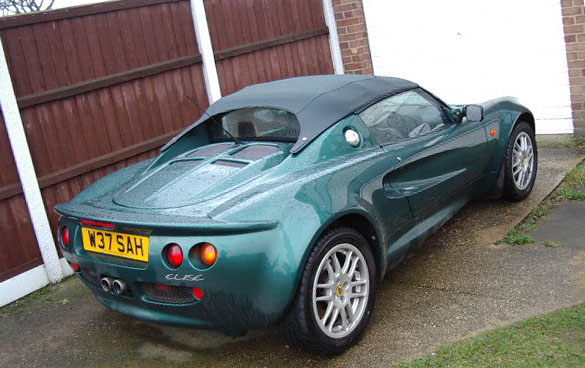
This is the 400th post. To CELEBRATE this Occasion, I'm covering Comprehensive review of Lotus Elise MK1. The Lotus Elise MK1's produced from 1997 to 2001 (1998 to 2003 In Malaysia).
The Elise is Quite rare in Malaysia. As a result, I don't have a car to test and brag about. All is NOT LOST, I dished out 3 videos review, 3 links to "Buyer's Guide", 1 Supertest by GoAuto Australia, and 4 Owners review sourced from Carsurvey.org.
In Malaysia, presently, there's 5 units of Lotus Elise MK1 on sale in Mudah.my. 1 1998, 1 1999 and 3 2000 model. From the 5 units, I worked out
the averaged Used Elise Pricing:
Video 2: Top Gear Best Handling Car In The World Part 1 of 2
Video 3: Top Gear Best Handling Car In The World Part 2 of 2
Followed by "SUPERTEST" by GoAuto Australia. ENJOY:
SUPERTEST: Lotus Elise MK1
Overview
IT'S big on price and short on equipment levels, but when it comes to
speed, handling and looks, the super-light Lotus goes off the scales.
Its lightness of being and a gutsy Rover engine provide the motivation
while the steering, brakes and handling will flatter the most ham-fisted
driver.
Such a shame it is beyond the budget of many sporty drivers.
Model release dates: January 1997 - June 2000
The Car
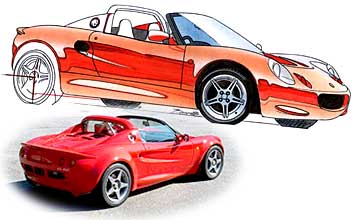
STUNNING. Distinctive. Small. Spartan. What else can we say about the
Elise? It's the work of Julian Thomson, who clearly had a wonderful time
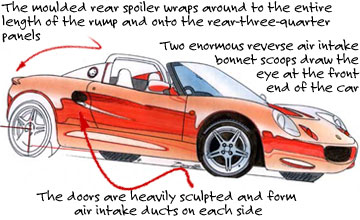
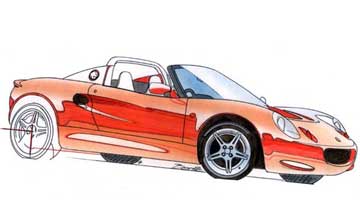
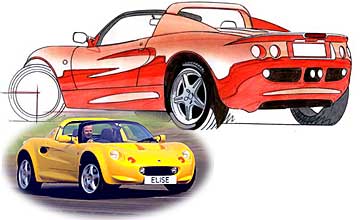
styling the car. The heavily sculpted "clamshell" body is made from lightweight
glass-fibre composite materials and designed to provide a minimum of
aerodynamic drag and maximum of interest from anyone who sees it.
Did you know?Brit Anthony Colin Bruce Chapman (1928-1982) founded lotus in 1955.
THE ACBC monogram is incorporated into the Lotus badge.
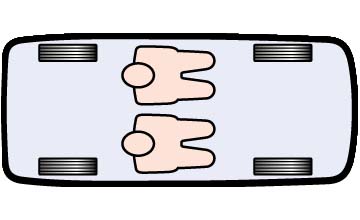
The Car - Seat Plan
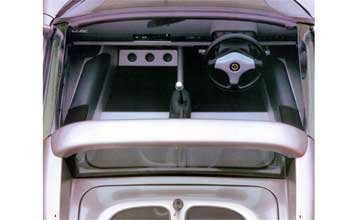
THE driver's seat is nearer the vehicle's centre-line than the passenger seat,
which itself is fixed in the rearmost position. The aluminium chassis is left
exposed along the floor, under the dash and along the sides of the car. A
number of small trays and pockets are provided for odds and ends, plus a
document net behind the front seats. Getting into the cockpit requires hurdling
over the high sill - best to climb in feet-first.
Did you know?
Some of the significant Lotus moments were the launch of the Lotus Seven
in 1957, the Type 19 (aka Monte Carlo) in 1960, Elan in 1962, Elite in 1974,
and Esprit and Eclat in '75.
The Car - Seats
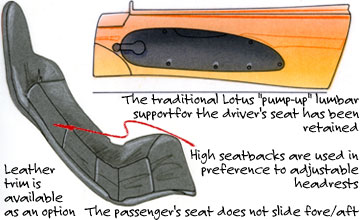
THE design of the seats was altered for the 2000 model year to provide
greater comfort, without compromising "seat of the pants" chassis feedback
to the driver. The traditional Lotus "pump-up" lumbar support for the driver's
seat has been retained. High seatbacks are used in preference to adjustable
headrests. Leather trim is available as an option. The passenger's seat does
not slide fore/aft.
The Car - Dash
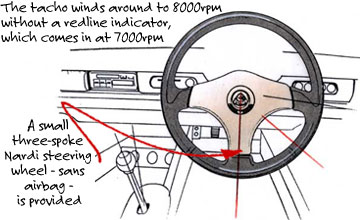
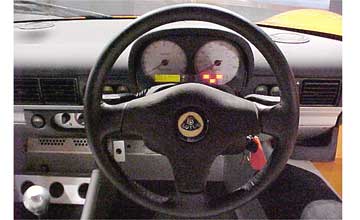
A spartan dash with a Stack racing car instrument layout offers large dials
for road and engine speed. All other information is delivered by a multi-
function LCD readout. A cigarette lighter can be found, but there is no
ashtray, nor is there a radio in the base model's standard equipment.
The Car - Controls
THE indicator and wiper stalks are borrowed from GM cars such as the
Barina, while the windows and mirrors are DIY jobs. A row of five buttons
to the right of the steering wheel - sourced from Peugeots of a bygone era -
controls the lights.
Did you know?
The top-shelf Elise is the $140,000-plus limited edition (340 worldwide)
340R racecar, which has a revised gearbox, suspension and brakes.
The Car - Wheels/tyres
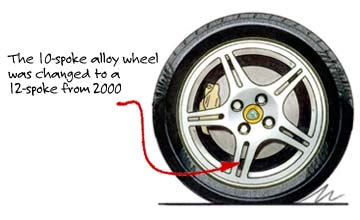
THE mid-engined Elise has a 39/61 per cent front to rear weight distribution
and as a result rides on 5.5x16 185/55R15 front wheels and tyres, and 7Jx16
205/50R16s at the rear. There's no room for a spare, just a tyre-inflating
aerosol can.
Did you know?
Lotus cars are built at Hethel in Norfolk, near Norwich
The Car - Luggage
The 2000 model year brought an improvement to the Elise's cargo carrying
ability, dispensing with the boot bag? A fully lined boot now uses the full area
behind the engine which is no Falcon or Commodore cargo space, but perfectly
acceptable for a couple of overnight bags
A piece of insulation underneath the boot carpet has also been added to shield the boot from exhaust heat. A further benefit of the larger boot is that the roof bows, previously stored behind the seats, can now be stored in the boot. There are two velcro clamps at the top of the engine bulkhead, which allow the roof bows to be easily stored.
The cloth hood and frame stow neatly behind the seats
The Car - Climate control
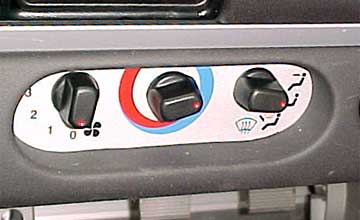
TO own an Elise means sacrifices must be made, and air-conditioning -
unavailable even as an option - is one of them. A minimum of heating/
temperature controls are provided - a fan knob and a control for heat and
air distribution.
The Car - Security
SECURITY is provided for with the inclusion of an engine immobiliser
- and that's about it.
Did you know?
A new generation Elise was due to go on sale in late 2001.
Our opinion
We like Light, sexy looks, clever use of advanced build system.
Room for improvement Tricky to enter, unexciting engine note, hilarious weather protection.
Our Opinion - Other opinions
"The Elise offers pure, basic motoring at its finest with compromises only to comfort. Sunburn, numb-bum, no luggage and too close an intimacy with the passenger are paybacks for a razor's edge experience at any speed. But still, love's like that."
"The Elise is a triumph - it is good enough to carry the rebirth of the marque on its shoulders and make Lotus great once more."
"Brilliant minimalist sports car, which unfortunately wears a maximalist price tag."
Mechanical
Mechanical - Plan views
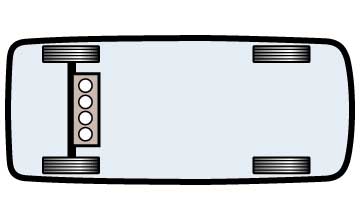
THE Elise adopts classic "mid-engine" design to equalise weight balance
between front and rear wheels. The transverse engine makes it less of a
true mid-engine design than the Porsche Boxster however. The four-
cylinder powerplant is derived from the MGF.
Mechanical - Engine
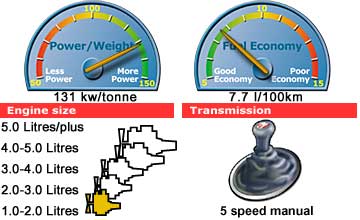
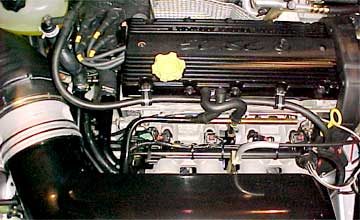
THE 1.8-litre DOHC 16-valve four-cylinder Elise engine has been transplanted
- unmodified - from the non-VVC MGF and develops 88kW at 5500rpm and
165Nm at 3000rpm. They aren't particularly startling figures until you consider
the Elise weighs just 690kg. Independent tests have shown it can blast from rest
to 100km/h in 6.5 seconds, and even that is sixth tenths off the official Lotus claim.
The low weight saves on fuel consumption too, though premium unleaded is called for.
Mechanical - Suspension
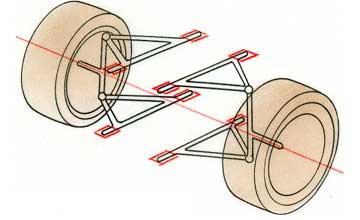
THE Elise uses a double wishbone suspension with single coil springs and
dampers front and rear. Uprights of extruded aluminium were made by
Alusuisse. The suspension setting is firm, in keeping with the car's no-
compromise racecar potential.
Mechanical - Transmission
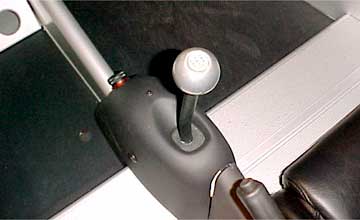
A FIVE-SPEED transaxle sourced from the MGF drives the Elise's rear wheels.
It's not the only item sourced from Rover - the K-series 1.8-litre engine and final
drive are straight from the MGF production line.
Automatic transmission is Unavailable.
Mechanical - Brakes
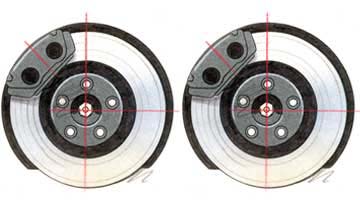
UNTIL the 2000 model year, the Elise used aluminium disc brakes which
saved a great deal of weight over materials such as cast iron. However, the
aluminium discs have proven unsatisfactory during sustained competition and
track work - where the car spends much of its time - and as a result Lotus
engineers have swallowed an increase in unsprung weight with the standard
fitment of steel brakes. Anti-lock braking is unavailable on the Elise.
Mechanical - Steering
TIPPING the scales at an incredibly light 690kg, the Elise's weight allows
power assistance to be deemed unnecessary. The steering system is rack
and pinion, with a turning circle of 10 metres. The unassisted steering goes
from lock to lock in just 2.7 turns.
Safety
THE lightweight aluminium chassis frame weighs a mere 70kg. Hollow
aluminium extrusions are joined by epoxy glue, with rivets added to
prevent peeling in the event of a collision. Side intrusion beams and a
roll bar are standard. A high-mount rear stoplamp is provided. Airbags
and anti-lock brakes are unavailable.
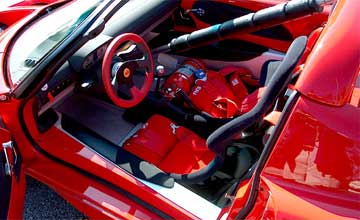
The Sport R version, which is set up for the racetrack, is shown above.